
Used Cars for Auburn College Students: How to Pick a Dependable First Car
Every August, a new wave of students arrives in Auburn, and many of them need a way to get to class, work and home for the holidays. Shopping used cars for a college student is a little different from shopping for yourself. The car has to be dependable, simple to own and easy on fuel, and it often has to satisfy a parent who will not be there to help when something goes wrong. This guide walks students and parents through the choices that matter most.
Start With How the Car Will Actually Be Used
Before you look at a single listing, sit down together and write out a normal week. A student who lives near campus and walks to class might drive only on weekends. A student who commutes from an apartment complex, works a part time job and drives home to Birmingham or Atlanta once a month puts on far more miles. The right car for each of those students is not the same.
Answer these questions first:
- How many miles a week will the car likely cover, and how much of that is highway driving?
- Will the car regularly carry friends, teammates or band equipment?
- Where will it be parked? A tight apartment lot or a parking deck rewards a smaller car.
- Who pays for gas, insurance and upkeep? That answer shapes how much car makes sense.
- How long should the car last? Getting through school and into a first job is a common goal.
Once you have those answers, the field narrows quickly. Most students do well with a compact sedan or a small SUV. Those vehicles are easy to park, cheaper to insure than larger or sportier models, and simple to maintain.
Traits That Make a Good First Car
A first car does not need every feature. It needs to start every morning and avoid surprises. Here is what to put at the top of the list.
A strong reliability record
Look for models with a long track record of dependable ownership. Toyota models such as the Corolla, Camry and RAV4 have been popular with families for decades for exactly this reason. A dependable model with average miles is usually a smarter buy than a flashy car with an uncertain history.
Modern safety equipment
Many late model Toyotas include a driver assist suite called Toyota Safety Sense. Depending on the model year, it can include a pre collision system that warns the driver and can brake automatically, lane departure alerts and automatic high beams. For a newer driver, those features add a useful layer of protection. Ask the salesperson which version a specific car has, because the features changed over the years.
Reasonable fuel use
Students feel every trip to the gas station. A compact car or a hybrid keeps running costs down. A used Corolla Hybrid or Camry Hybrid can be a smart pick for a student who drives home often.
Simple, affordable upkeep
Common models have parts that are easy to find and service steps that any Toyota technician knows well. That keeps maintenance visits short and predictable. Allen Turner Toyota of Auburn tells shoppers to rely on its skilled technicians for superior Toyota service.
How to Judge Mileage, Age and History
Parents often ask whether they should focus on age or miles. The honest answer is that condition and history matter more than either number by itself. An older car with steady highway miles and complete service records can be in better shape than a newer car that sat for long stretches or missed oil changes.
Read the vehicle history report
A vehicle history report shows the number of owners, reported accidents, title problems and, often, service visits. Look for these warning signs:
- A salvage, rebuilt or flood title
- Gaps of several years with no reported service
- Frequent changes in ownership over a short period
- Odometer readings that do not climb in a steady pattern
Look at how the miles were added
Steady miles from a commute are easier on a car than constant short trips. If the history shows the car spent years in a region with harsh winters, ask the technician to check underneath for rust.
Ask about open recalls
Any dealer can check a vehicle identification number for open safety recalls. A Toyota dealer can complete Toyota recall work at no charge to you, which is one more reason to buy from a store that services the brand.
Certified or Regular Used: Which Makes Sense for a Student
A Toyota Certified Used Vehicle goes through a quality assurance inspection and comes with added coverage. According to Toyota, a Gold Certified vehicle is up to 6 model years old with 85,000 miles or less, and it includes a 12 month or 12,000 mile limited comprehensive warranty plus a 7 year or 100,000 total vehicle mile limited powertrain warranty. A CARFAX vehicle history report is a required part of every Toyota Certified Used Vehicle.
For a family sending a student several hours from home, that coverage can be worth a lot of peace of mind. If something major fails, the repair can be handled by any Toyota dealer, including one near campus. Toyota also includes roadside assistance with certified vehicles, which helps if a tire goes flat on a back road at night.
A regular used car can still be a good choice, especially an older, higher mileage model that would not qualify for certification. In that case, put more weight on the inspection and the service records, and set aside money for maintenance in the first year.
Toyota Models Students Often Consider
Every student is different, but a few Toyota models come up again and again when families shop for a first car. Each one fills a slightly different need.
Corolla and Corolla Hybrid
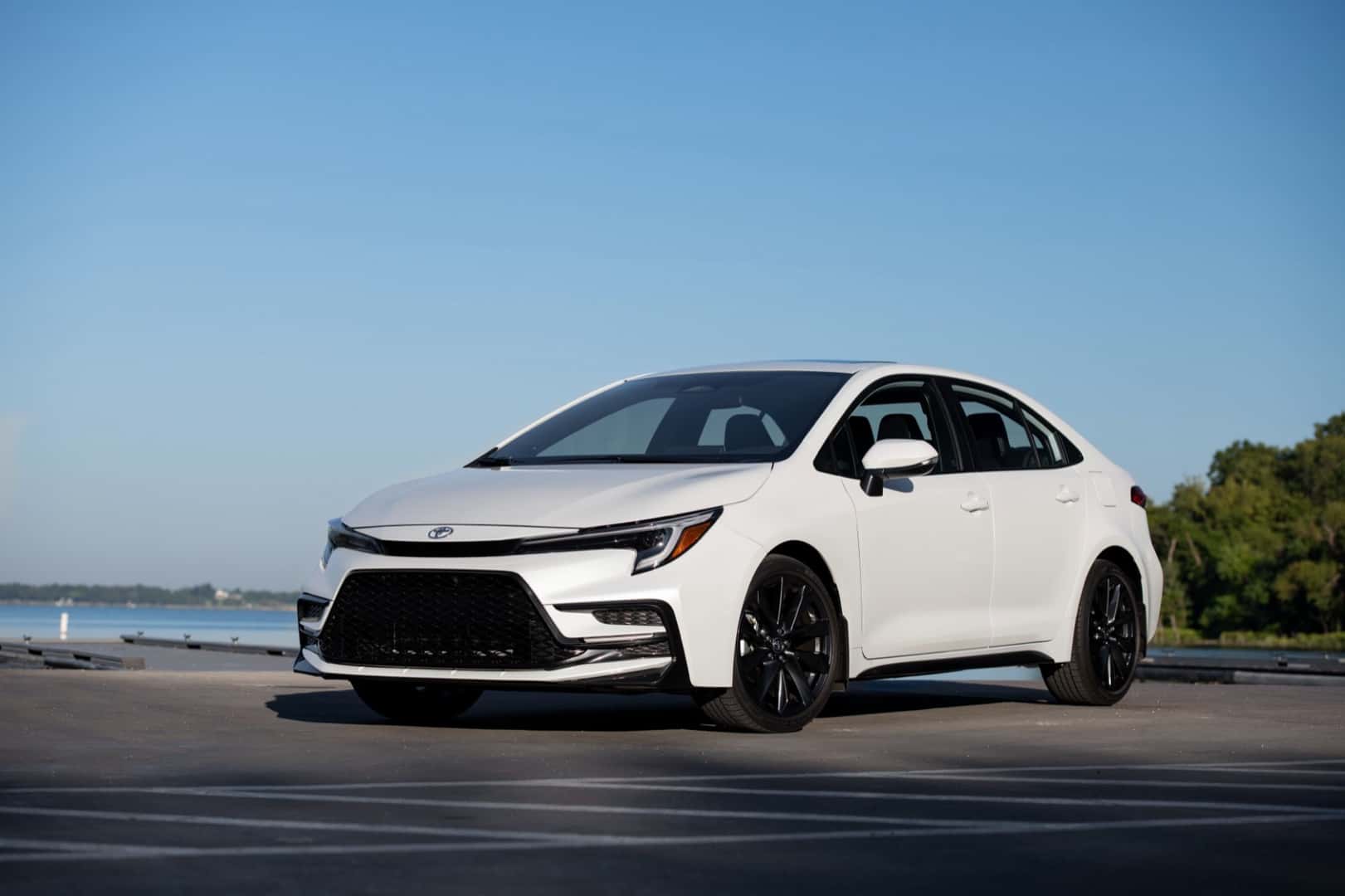
The Corolla is a compact sedan that is easy to park, simple to drive and inexpensive to maintain. It suits a student who mostly drives around town and makes the occasional trip home. The hybrid version adds even better fuel economy for students who cover more highway miles.
Camry and Camry Hybrid
The Camry is a midsize sedan with more back seat and trunk room than the Corolla. It is a good fit for a student who often drives friends to games or carries gear for a club sport. It feels steady on the interstate, which helps on long drives home.
Prius
The Prius is built around efficiency. Its hatchback shape makes it easy to load a laundry basket, a mini fridge or a bike with the wheel removed. Students who commute daily often like how rarely they need to stop for gas.
Corolla Cross and RAV4
A small SUV gives a higher seating position and a larger cargo area. The Corolla Cross is the smaller of the two and easier to fit into a tight space. The RAV4 has more room and is popular with students who head to the lake or the mountains on weekends. Available all wheel drive on many model years adds traction on wet roads.
Test drive as a team
A test drive is the best way to learn whether a car fits the student who will drive it. Let the student drive, and let the parent ride along and take notes. Plan a route that copies real life: a stretch of highway, a few stoplights, a parking lot and a rough side street.
- Can the student see clearly out of the mirrors and the back window?
- Is the seat comfortable after fifteen minutes behind the wheel?
- Does the phone connect easily for calls and maps?
- Does the car brake straight and smoothly, with no grinding or pulling?
- Are there any warning lights on the dash after the car warms up?
- Does the air conditioning blow cold quickly? In an Alabama August, that matters.
After the drive, compare notes. If the student felt nervous or cramped, keep looking. A car that feels comfortable and easy to see out of is a car the student will drive more safely.
Costs, Insurance, Paperwork and Upkeep
Think about the full cost of owning the car
The purchase is only one part of what a car costs. Before you settle on a model, talk through the ongoing costs in plain terms: fuel, insurance, routine maintenance, tires and the occasional repair. A smaller, efficient car usually keeps all of those lower. A larger or sportier model can cost more in every category even when the purchase looks similar. Agreeing on who covers each cost avoids hard conversations in the middle of the semester.
Insurance, registration and paperwork basics
Paperwork is where many families get tripped up, so plan ahead. A little preparation keeps the purchase day short and calm.
- Insurance: Call your insurance agent before you buy. Ask how a specific model and the student’s driving record affect the policy. Ask whether the student can stay on a parent’s policy while living in Auburn.
- Title and registration: Decide whose name goes on the title. If the student is from out of state, ask the dealership’s finance team how registration works for your situation. Rules differ by state, so get the answer for your exact case.
- Financing: If the student is building credit, a parent may need to co sign. Allen Turner Toyota of Auburn says its lenders work with a wide range of credit profiles, and it offers access to multiple lenders for competitive offers. You can also submit a quick online application so the team can tailor options before you visit. The finance team can explain the options in plain terms and show what the loan length means for the total cost.
- Records: Keep the bill of sale, title paperwork and service records in one folder, and save digital copies to a shared drive.
Plan for maintenance before you leave the lot
The most common reason a dependable car becomes undependable is skipped maintenance. Students are busy, and an oil change reminder is easy to ignore during exams. Build a simple plan together:
- Note the date and mileage of the last oil change, and set a phone reminder for the next one.
- Check tire pressure once a month. Hot Alabama afternoons and cool mornings make pressure swing.
- Learn where the spare tire, jack and owner’s manual are kept.
- Save the service department’s phone number in the student’s phone.
- Agree on what the student should do after any warning light: stop, check the manual, and call.
A short walk through of the car’s basics before the student drives off is time well spent. Show them how to check oil, add washer fluid and read the dashboard lights.
Shop Used Cars With Allen Turner Toyota of Auburn
If you are helping a student find a dependable first car, start by browsing the used vehicle inventory at Allen Turner Toyota of Auburn. You can compare models, mileage and history reports online, then schedule a test drive that fits around class schedules. Our finance team can walk parents and students through the paperwork together, and our service department can keep the car on schedule all the way to graduation. Sales, financing, service, parts and collision repair are all handled under one roof, so one stop covers the whole process.
Key Points to Remember
- Define how the car will be used before you shop.
- Put reliability, safety equipment and fuel use ahead of extras.
- Judge condition and history, not just age or miles.
- Consider a Toyota Certified Used Vehicle for added coverage far from home.
- Sort out insurance and registration before the purchase.
- Set up a maintenance routine on day one.
A careful plan now saves stress later. With the right car and a simple upkeep routine, a student can focus on classes in Auburn instead of car trouble. Learn more about our dealership and how we help Auburn families.
Frequently Asked Questions
What is a good mileage range for a student’s first used car?
There is no single right number. Condition, service records and how the miles were added matter more than the odometer alone. A well maintained car with steady highway miles can be a better buy than a lower mileage car with gaps in its history.
Is a certified pre owned Toyota worth it for a college student?
It can be, especially when the student lives far from home. A Gold Certified Toyota includes a limited comprehensive warranty, a limited powertrain warranty and roadside assistance, according to Toyota. That coverage can reduce the risk of a large surprise repair bill.
Can a parent co sign on a used car loan for a student?
In many cases, yes. A co signer can help a student with little credit history qualify. Talk with the dealership’s finance team to understand the responsibilities that come with co signing before you decide.
Should a student buy a sedan or a small SUV?
A compact sedan is usually easier to park and lighter on fuel. A small SUV offers more cargo room and a higher seating position. Think about parking, passengers and trips home, then test drive one of each.
Sources (as of October 30, 2026)
- Toyota Certified Used Vehicles (as of October 20, 2026)
- Finance | Allen Turner Toyota of Auburn (as of October 30, 2026)
- Allen Turner Toyota of Auburn (as of October 30, 2026)
$899 Documentation Fee included in final price. Plus tax, title, license. On approved credit through dealer preferred lender.
0 comment(s) so far on Used Cars for Auburn College Students: How to Pick a Dependable First Car