
Toyota Tacoma Towing Capacity Comparison
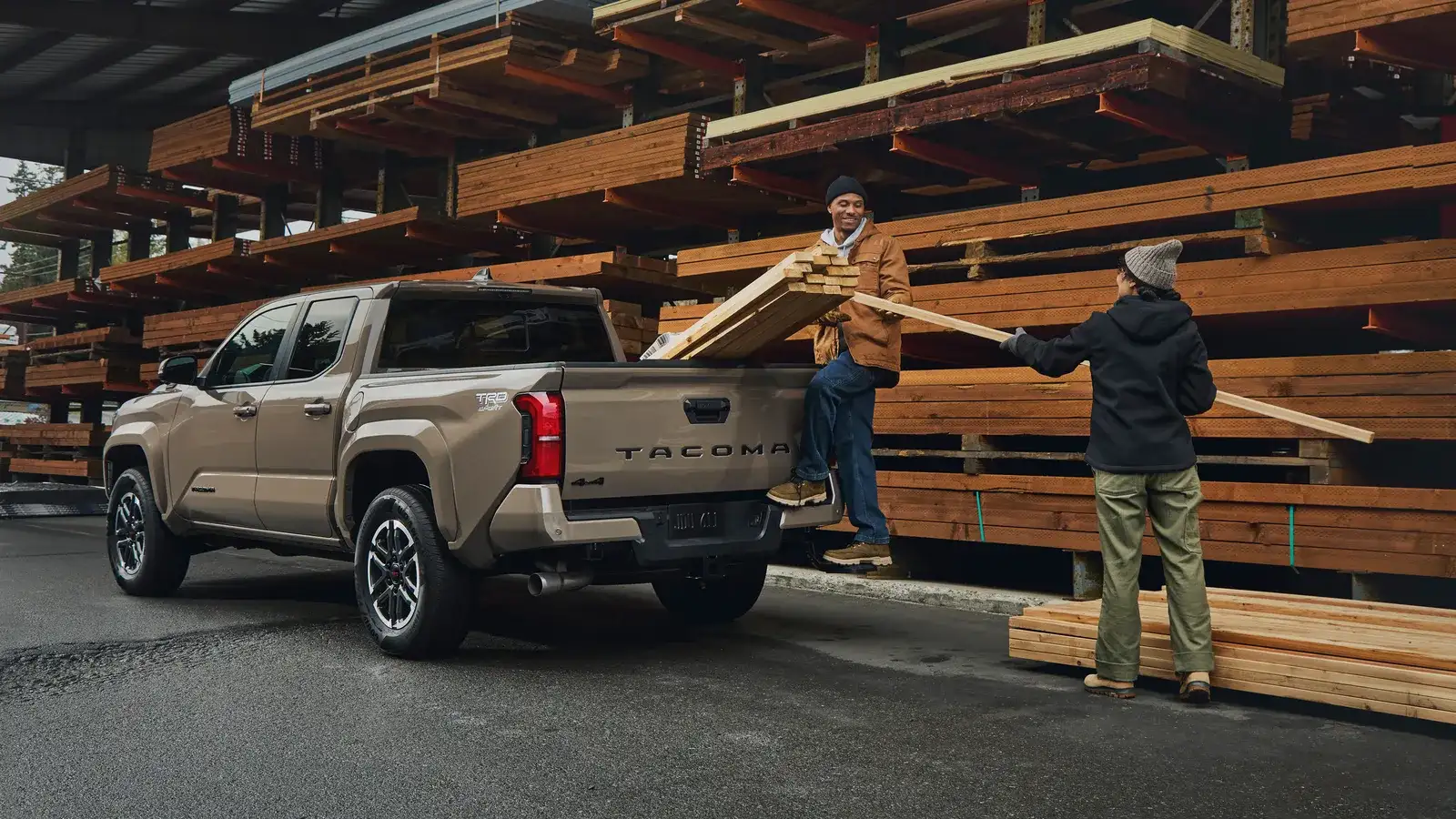
A Tacoma that can handle a utility trailer for weekend projects may not be the right Tacoma for a loaded camper or a boat headed to the lake. This Toyota Tacoma towing capacity comparison separates the headline numbers from the real-world details that determine whether a truck is a confident match for your trailer.
For drivers around Auburn, Opelika, and East Alabama, the right answer usually comes down to the trailer’s loaded weight, how often you tow, and how much gear or how many passengers ride in the truck at the same time.
Toyota Tacoma Towing Capacity at a Glance
The current Toyota Tacoma has a maximum conventional towing capacity of up to 6,500 pounds when properly equipped with the available i-FORCE turbocharged engine. Tacoma models with the i-FORCE MAX hybrid powertrain can tow up to 6,000 pounds when properly equipped.
Those are maximum figures, not a rating that applies to every Tacoma. Cab style, bed length, drivetrain, powertrain, installed towing equipment, and model year can all change the rating. Some configurations are rated closer to 3,500 pounds, which is still useful for lighter trailers but creates a very different ownership experience than a 6,500-pound-rated truck.
For perspective, properly equipped prior-generation Tacoma models could tow up to 6,800 pounds. The newest Tacoma’s maximum rating is slightly lower, but the current truck brings a turbocharged powertrain, modern towing technology, and available hybrid torque that may make it the more appealing choice for many drivers. The right comparison is not simply old maximum versus new maximum. It is whether a specific truck gives your specific trailer enough capacity and enough margin.
Tacoma Towing Capacity Comparison by Powertrain
i-FORCE Gas Models: Up to 6,500 Pounds
The 2.4-liter turbocharged i-FORCE engine is the place to start for shoppers whose priority is the Tacoma’s highest available towing rating. Properly equipped versions can tow up to 6,500 pounds.
That capacity can suit a variety of common uses: a medium-size travel trailer, a fishing boat, a side-by-side trailer, or work equipment. Still, shoppers should calculate the fully loaded trailer weight, not just the dry weight printed in a brochure. Water, fuel, batteries, tools, camping gear, coolers, and personal items add up quickly.
A gas-powered Tacoma may be the practical fit if your trailer is relatively close to the upper end of the Tacoma range and you want the maximum available conventional tow rating. It can also be a straightforward choice for owners who spend more time towing on highways than crawling off-road.
i-FORCE MAX Hybrid Models: Up to 6,000 Pounds
The available i-FORCE MAX hybrid powertrain makes more torque than the standard gas engine, which can be helpful when moving a trailer from a stop, climbing hills, or merging into highway traffic. Properly equipped hybrid Tacoma models can tow up to 6,000 pounds.
Why choose the hybrid if the gas Tacoma has the higher maximum rating? Towing capacity is only one part of the decision. Hybrid torque and responsive low-speed performance can make a trailer feel easier to manage in everyday driving. Many shoppers also prefer the hybrid for its stronger power delivery and its broader capability away from the pavement.
The trade-off is clear: if a trailer is near 6,500 pounds when loaded, the i-FORCE gas Tacoma is the better starting point. If the trailer is comfortably below 6,000 pounds and you value hybrid performance, the i-FORCE MAX deserves a close look.
Lower-Rated Configurations: Around 3,500 Pounds
Not every Tacoma is built around maximum towing. Certain configurations have ratings around 3,500 pounds, which can be appropriate for small utility trailers, lightweight aluminum boat trailers, personal watercraft, motorcycles, and occasional home-improvement runs.
A lower-rated Tacoma is not a lesser truck. It may simply be configured for a different job, such as daily driving, trail use, payload needs, or a preferred cab and bed arrangement. The key is being honest about the trailer you may own two or three years from now, not only the trailer you have today.
What Changes a Tacoma’s Tow Rating?
The maximum rating on a Tacoma depends on the exact vehicle, not just its trim badge. A Double Cab versus an XtraCab, 4×2 versus 4×4 drivetrain, and different bed lengths can affect how much trailer weight Toyota approves. Added equipment and the truck’s curb weight also matter.
Towing equipment is equally important. A receiver hitch alone does not make a truck ready to tow its maximum rating. Confirm that the Tacoma has the correct hitch setup, trailer wiring, suitable ball mount, and brake-control equipment for the trailer. Depending on the trailer and its loaded weight, trailer brakes and a properly adjusted brake controller can make a major difference in control and stopping confidence.
Always verify the rating on the driver’s door-jamb label, in the owner’s manual, and for the exact VIN before buying a trailer. A dealership team can help match the vehicle’s equipment and rating to a trailer, but the final responsibility is to stay within the truck’s published limits.
Tow Rating Is Not the Only Number That Matters
The most common towing mistake is focusing only on the maximum trailer rating. Payload is just as important.
Payload includes people in the cab, cargo in the bed, accessories, and the trailer’s tongue weight. A conventional trailer typically places roughly 10% to 15% of its loaded weight on the hitch. A 5,000-pound loaded trailer can therefore put approximately 500 to 750 pounds on the truck before passengers, a toolbox, or camping supplies are added.
That is why a Tacoma with a 6,500-pound maximum towing capacity may not be the ideal match for every 6,500-pound trailer. You want room for the people and gear you actually carry. Staying below the maximum can improve stability, braking feel, and confidence during long drives or changing weather.
Tacoma vs. Tundra for Towing
The Tacoma is a strong choice for drivers who need a midsize truck that is easier to park, capable on trails, and able to tow recreational or work trailers within its limits. For many households, it is the sensible middle ground between daily convenience and weekend capability.
A Tundra is worth comparing if towing is a frequent responsibility or your loaded trailer approaches the Tacoma’s upper limit. Properly equipped Tundra models can tow up to 12,000 pounds, offering substantially more room for larger campers, heavier boats, enclosed trailers, and equipment. That extra capacity also leaves a wider safety margin for passengers and cargo.
The trade-off is that a full-size truck is larger and may be more truck than some owners need. If your trailer weighs 3,000 to 4,500 pounds loaded and you tow occasionally, a properly equipped Tacoma can be an excellent fit. If you routinely tow near 6,000 pounds, travel with a full cab, or expect to upgrade to a larger trailer, compare the Tundra before making a final decision.
How to Choose the Right Tacoma for Your Trailer
Start with the trailer’s gross vehicle weight rating, often called GVWR. This is the maximum the trailer is designed to weigh when loaded. Next, estimate your normal cargo, fuel, water, and passenger load rather than assuming you will always tow empty.
Then compare that number with the exact Tacoma’s tow rating and payload label. It is wise to leave capacity in reserve, especially for trips that involve hills, wet roads, longer distances, or changing loads. Drivers towing through rural roads near Tuskegee, Waverly, or Society Hill may value that extra margin as much as the maximum number on paper.
If you are shopping used, take the same careful approach. A Toyota Certified Pre-Owned or other used Tacoma can be a smart value, but ratings vary by year and configuration. Do not assume two Tacoma trucks with similar appearances have the same towing limit.
A trailer should expand what you can do, not turn every trip into a calculation. Browse new and used Tacoma inventory, bring in your trailer details, and let the team at Allen Turner Toyota of Auburn help you compare configurations, review financing options, and choose a truck that feels right for the road ahead.
Frequently Asked Questions
Can a Tacoma tow a pontoon boat to Lake Martin?
Often, yes, but it depends on the loaded weight of the boat, motor, fuel and trailer. Many pontoon setups fall within a properly equipped Tacoma rating, while larger ones may not. Weigh the loaded trailer or check its GVWR, then compare it with the exact truck’s tow rating and payload label.
Does the Tacoma need a weight-distribution hitch?
Follow the owner materials for your specific Tacoma and trailer. Heavier conventional trailers can benefit from a weight-distribution hitch to level the truck and trailer, but it does not raise the published tow or payload ratings. A dealership service team can help confirm the right hitch equipment for your setup.
Is a manual-transmission Tacoma good for towing?
The manual is offered on select Tacoma configurations aimed at enthusiasts, and its tow rating can differ from automatic models. For frequent towing, many drivers prefer the automatic for its smoother low-speed control. Check the exact rating for the configuration you are considering.
How do Alabama boat ramps affect which Tacoma I should buy?
Wet, steep or algae-covered ramps reward traction. Four-wheel drive and good tires can make launching and retrieving a boat easier, especially on rural ramps. Weigh that benefit against the small effect added equipment can have on tow and payload ratings for the specific truck.
0 comment(s) so far on Toyota Tacoma Towing Capacity Comparison