
How To Prepare Your Toyota for Auburn’s Rainy Season
Auburn’s wild weather patterns dump heavy rain that can turn regular roads into slick hazards in minutes. Getting your Toyota ready before our storms hit means you’ll have safer drives and fewer costly fixes later on. A little prep work now will improve your safety when those gray clouds roll in.
Check Your Tires for Rain-Ready Grip
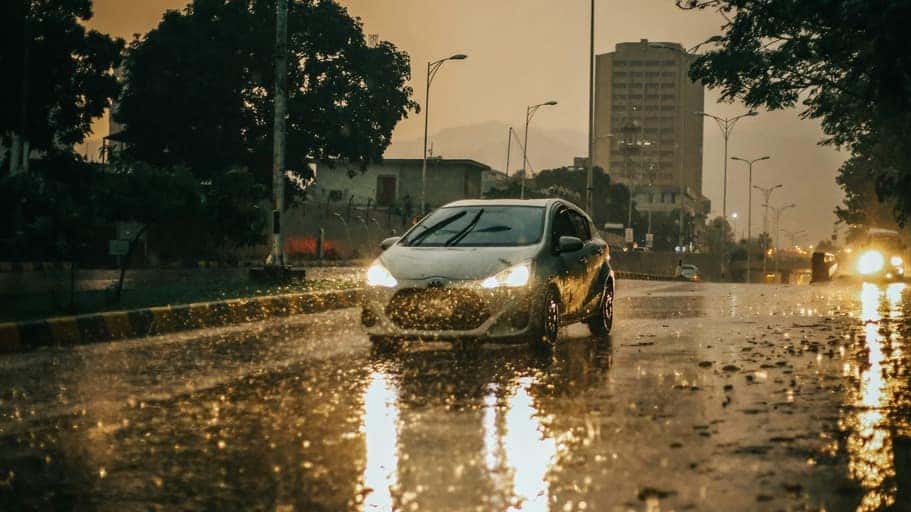
Your tires are your only connection to the road, and they’re all the more critical in wet conditions. Try the penny test — stick Lincoln’s head down in the groove. If you see the top, it’s time for new tires. Federal rules require front wheels to have a minimum of 4/32 inches tread depth and 2/32 inches for all other tires.
Worn tires don’t perform well on wet pavement. At the legal minimum (2/32 inches), they need about double the stopping distance as new ones. At 60 mph on wet roads, new tires (10/32 inches) give you significantly better response. Worn tires can hydroplane at speeds as low as 40 mph, while new ones can maintain grip until at least 43-44 mph.
Auburn’s temperature swings affect tire pressure. Every 10-degree drop reduces pressure by 1-2 psi, triggering your tire pressure monitoring system light. Proper pressure affects tire wear, handling, and stopping distance on wet roads. Uneven wear patterns signal alignment or suspension issues that should be addressed before stormy weather.
Replace Worn Wiper Blades
Safe driving demands clear windshield visibility during Auburn’s sudden downpours. Wiper blades last about six to 12 months, depending on usage and weather conditions. If you notice chattering, skipping, squeaking, streaks, or missed spots, replace the blades.
Toyota-original blades fit perfectly and outperform cheap alternatives. Correct sizing means better performance during heavy rain, and different Toyota models require specific sizes. Check your owner’s manual or give our team a call to figure out which ones you need.
Some Toyotas feature rain-sensing wipers that respond to precipitation automatically. Some drivers report issues in heavy rain or light mist, so you may want to disable this feature in certain conditions. If you have a malfunctioning sensor, bring your vehicle to our team for professional recalibration.
Inspect and Test Your Brakes
On wet Auburn roads, the brakes are your Toyota’s most important safety gear. Stopping distances double on wet pavement compared to dry roads. Your brake fluid soaks up moisture over time, lowering the temperature at which it will stop working properly. This leads to that scary spongy feeling in your brake pedal during hard stops.
Moisture also rusts metal parts such as calipers, master cylinders, and ABS valves, causing leaks and pricey repairs down the road. Most cars need fresh brake fluid every two years, but if you drive hard or face lots of bad weather, change it yearly instead.
Clean and Seal Your Windshield
A clean windshield might save your life during Auburn’s heavy rains. Road grime, tree sap, and water spots create dangerous glare in the rain, making it hard to see what’s ahead. Invest in quality auto glass cleaner and microfiber cloths to thoroughly remove stubborn gunk that car washes miss.
Water-repelling windshield treatments make a huge difference in how well you can see in the rain. Products such as RainX allow raindrops to bead up and roll away, letting you use the wipers less often. The whole process takes about 15 minutes: clean the glass thoroughly, put the product on evenly, let it dry (a slight haze may appear), then buff it off with a clean microfiber cloth. These simple steps can really pay off when the skies open up.
Check Headlights, Taillights, and Fog Lights
Seeing and being seen matter equally during Auburn’s rainy days. LED headlights throw brighter, more focused light than old halogen bulbs, making driving at night and in bad weather much safer. They’re also more efficient, so they put less strain on your car’s electrical system compared to halogen lights. LEDs last longer too — up to 50,000 hours compared to just 1,000 hours for typical halogen bulbs.
Clean your headlight lenses regularly — foggy or yellow lenses can cut your light output drastically. Don’t forget to check all your other lights too; your Toyota’s taillights, brake lights, turn signals, and hazard lights help other drivers spot you in downpours. Automatic light sensors sometimes don’t detect heavy rain or fog, so be ready to turn on your lights manually when visibility drops.
Emergency Kit Essentials for Wet Weather
Emergency kits can turn disasters into manageable situations. Government experts recommend having jumper cables, flares or reflective triangles, an ice scraper, a car phone charger, a blanket, a map, and cat litter or sand for improving traction. Other important items to consider keeping in your car are:
- Jump starter
- First aid supplies
- Flashlight with spare batteries
- Tire repair kit
- Spare tire with jack and wrench
- Nonperishable food and water
- Fire extinguisher
- Duct tape
- Work gloves
- Rain poncho or umbrella
- Basic tools
- Washer fluid
- Empty gas can
Wet weather demands extra preparation, and Toyota storage bins organize everything accessibly. Check your kit every few months so you can replace expired items, rotate food supplies, and test batteries.
Schedule Your Rainy Season Checkup at Allen Turner Toyota
At Allen Turner Toyota, our factory-trained technicians understand both Toyota vehicles and Auburn’s weather challenges. We provide comprehensive seasonal prep, including tire checks, brake tests, fluid top-offs, cooling system service, air conditioning testing, battery inspection, and emergency gear guidance. Our pros can catch small problems before they become costly storm emergencies.
Ultimately, prevention costs less than emergency repairs. Call 334-246-0809 for appointments and current maintenance package deals. Like our summer preparation services, we’ll get your Toyota ready for rainy conditions. Schedule online before the storm season rush begins.
Stay Prepared and Drive With Confidence This Rainy Season
All these elements work together like a safety net for Auburn’s wet months: good tires, fresh wipers, maintained brakes, clean glass, working lights, emergency kits, and pro inspections. This complete approach keeps both you and your car protected when storms roll through.
Don’t wait for trouble — book your rainy season checkup today at Allen Turner Toyota of Auburn, where we combine Toyota knowledge with local weather wisdom to keep you safe on wet Auburn roads.
0 comment(s) so far on How To Prepare Your Toyota for Auburn’s Rainy Season